A great record can sound perfect. A great show can change your life. These are the greatest live performances of all time, the shows people still talk about decades later, along with one thing every working band can learn from each.
Queen at Live Aid (1985)
Wembley Stadium, 72,000 people in the crowd and an estimated TV audience of well over a billion. Queen had about 20 minutes, and they used every second. Freddie Mercury's call-and-response "Ay-Oh" had the whole stadium singing back, and the set ran hit after hit: "Bohemian Rhapsody," "Radio Ga Ga," "Hammer to Fall," "We Are the Champions." It's regularly voted the greatest live performance ever.
The lesson: a short set is a chance, not a limit. Queen cut everything that wasn't a peak, and they made the crowd part of the show.
Jimi Hendrix at Monterey Pop (1967)
Hendrix, now on every list of the best guitarists of all time, was a near-unknown in America when he walked onstage at Monterey. He played with his teeth and behind his back, tore through "Killing Floor," "Hey Joe" and "Wild Thing," then set his guitar on fire. He left as a star. Two years later, his "Star-Spangled Banner" at Woodstock became one of the defining moments of the decade.
The lesson: have a moment. Not every band should torch a Strat, but every set should have something the audience will describe to their friends the next day.
The Beatles at Shea Stadium (1965)
Lennon and McCartney were already among the best songwriting duos in pop when more than 55,000 fans packed a baseball stadium for what's often called the first major stadium rock concert. The screaming was so loud that the band could barely hear themselves through the ballpark's PA. It showed that rock could fill stadiums, and it pushed the industry to invent the sound systems that make stadium shows possible today.
The lesson: know your rig. If you can't hear yourselves, you can't play together. Sort out your monitor mix before it sorts you out.
The Beatles on the Apple rooftop (1969)
The Beatles' last public performance was unannounced: a lunchtime set on the roof of their Apple Corps office in London, until the police came up to shut it down. With no stage, no lights and an audience of office workers and passersby, it's still one of the most famous live moments ever.
The lesson: you don't need a big venue to make a memorable show. A surprising place and a great band can beat any stage.
Metallica in Moscow (1991)
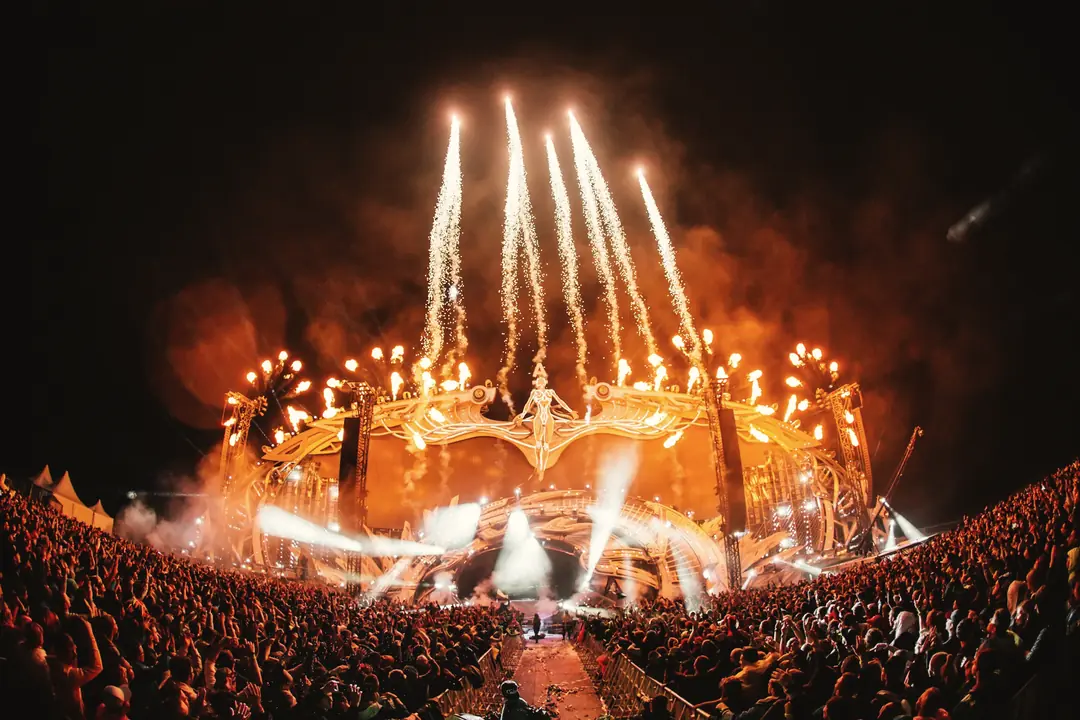
About a month after the failed coup in the Soviet Union, Metallica headlined the Monsters of Rock festival at Tushino Airfield outside Moscow. Estimates of the crowd run from several hundred thousand to over a million people. For many of them it was their first big Western rock concert, and it became a symbol of a country opening up. (New to thrash? Our guide to metal genres starts there.)
The lesson: context matters. The same set can mean much more depending on when and where you play it.
Radiohead at Glastonbury (1997)
Radiohead headlined Glastonbury weeks after releasing OK Computer, on a muddy night when their monitors were failing and Thom Yorke nearly walked off. They pushed through, and the set is now remembered as one of the festival's best ever.
The lesson: shows go wrong. The bands people remember are the ones that keep playing.
Daft Punk at Coachella (2006)
Daft Punk played Coachella from inside a giant LED pyramid, mixing their catalog into one nonstop set. It redefined what an electronic live show could look like, and the influence of that stage design is still everywhere.
The lesson: a show is visual too. Even on a small budget, think about what the audience sees, not just what they hear.
Prince at the Super Bowl (2007)
Rain poured down on Miami during the halftime show, and Prince played straight through it, ending with "Purple Rain" in an actual downpour. It's widely considered the best halftime show ever.
The lesson: when something unexpected happens, lean in. The rain didn't ruin the show, it made it.
Kendrick Lamar at the Grammys (2016)
Kendrick Lamar's performance of "The Blacker the Berry" and "Alright" at the 58th Grammy Awards turned a TV slot into a powerful statement about race and justice in America, with a full band and a staging nobody forgot.
The lesson: say something. Audiences remember performances that mean something to the people performing them.
What the best live performances of all time have in common
Look across these shows and a few habits keep coming up:
- They rehearse until the songs play themselves. Confidence on stage comes from preparation. When the parts are in your hands, you can look up and connect.
- They play to the people in front of them. Eye contact, moving with purpose, and talking to the crowd turn a set into a shared experience.
- They leave room for the unexpected. An extended jam, a rain shower, a broken monitor: the best performers treat surprises as part of the show.
- They play as a band. Every one of these performers had people around them who were locked in. Great shows come from players who know each other's playing inside out.
Great live moments start with the right people on stage together. If you're still putting that lineup together, here's how to find band members who fit, and our guide to starting a band covers the rest, from first rehearsal to first gig.
FAQ
Who are the greatest live performers of all time?
Freddie Mercury, Prince, James Brown, Bruce Springsteen, Tina Turner and Beyoncé come up on almost every list.
What's the greatest concert of all time?
Queen at Live Aid in 1985 is the most common answer, and it regularly tops polls of the best live performances ever.